
Can capital expenditures related to the purchase and installation of a photovoltaic system constitute eligible costs?

25.03.2026
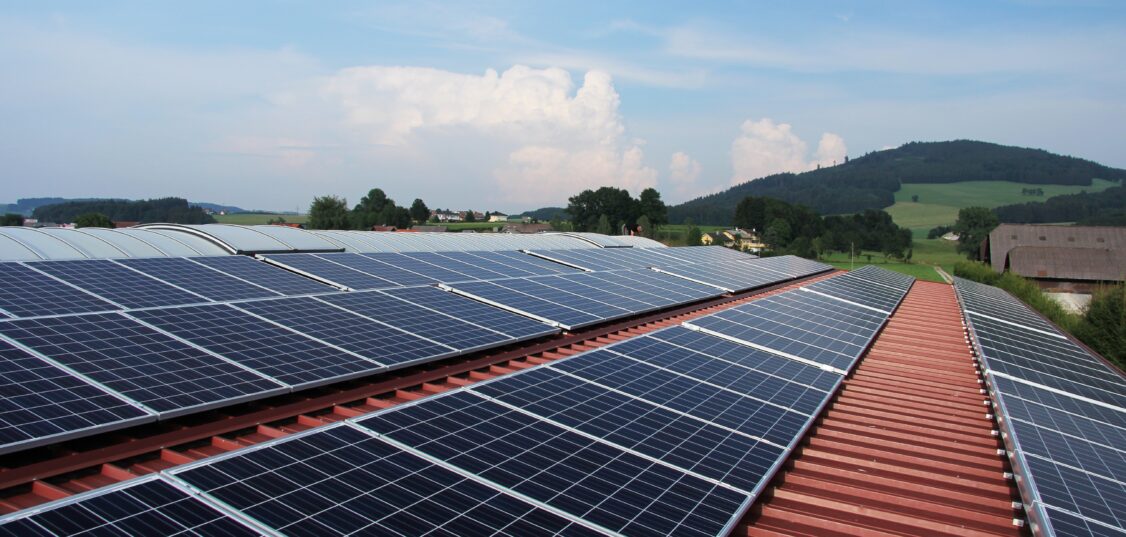
In my view, yes.
Although for a considerable time, the answer to this question gave rise to significant uncertainty – on the part of investors, tax authorities, and the entities issuing investment support decisions (hereinafter: “DoW”) alike.
Where did the uncertainty originate?
Crucially, the source of that uncertainty was not the statutory provisions defining the catalogue of eligible costs. The problem was, to a large extent, of a practical nature and stemmed from the wording of one of the mandatory declarations included in the application for an investment support decision (as per the template set out in the 2018 Regulation).
That declaration read as follows:
“I hereby declare that the reported eligible costs of the investment (regional aid), submitted in connection with the application for an investment support decision, do not include investment costs related to energy generation and distribution, or the infrastructure associated therewith.“
In practice, this declaration was frequently interpreted literally. As a result, expenditures on photovoltaic installations – as being connected to energy generation – were automatically excluded from the pool of eligible costs, without any deeper examination of the investment’s purpose or context. The reasoning was straightforward: if the entrepreneur declares that costs related to energy generation and the associated infrastructure are not included, then expenditures on a photovoltaic installation automatically fall outside the scope of eligible costs.
This interpretation was convenient. In my view, however, it was also excessively reductive.
It led to the conflation of any energy-related investment with an activity categorically excluded from aid eligibility – irrespective of the actual objective of the project or the functional role the installation played within the enterprise.
The problem was not photovoltaics per se, but the purpose of the investment
This is precisely where a broader analytical perspective is required.
Not every energy-related investment signifies that the entrepreneur is engaged in a project whose core business is the generation or distribution of energy. An energy investment constituting the primary subject of a project is a fundamentally different matter from an installation designed to support the enterprise’s operations – whether in manufacturing, logistics, or otherwise.
In my assessment, it is precisely this distinction that is of decisive importance.
The EU framework and the position of the Office of Competition and Consumer Protection (UOKiK)
In parallel, however, a different approach existed – one grounded in EU law and its interpretation.
In a letter from the European Commission dated 29 October 2018, addressed to the President of UOKiK, it was indicated that the exclusion of the energy sector from regional investment aid concerns primarily activities related to the generation and distribution of energy as such (NACE Division 35). This does not, however, entail the automatic exclusion of all energy-related costs.
The Commission expressly recognized the possibility of treating a portion of such costs as eligible, subject to the cumulative satisfaction of three conditions:
- Energy generation is not the primary objective of the project – meaning that the principal portion of the investment expenditure does not relate to energy infrastructure.
- The generation capacity is sized to the enterprise’s own requirements – which in practice means adherence to the 80/20 rule: up to 20% of energy output may be sold externally, subject to an ex ante analysis.
- The investment involves eligible energy sources – such as renewable energy sources or high-efficiency cogeneration (excluding, for example, sources based on diesel engines).
This position was subsequently confirmed in correspondence from the Office of Competition and Consumer Protection directed to the management companies of special economic zones and to the relevant ministries.
Practical insights and the 2022 publication
The divergence between the literal wording of the declaration and the interpretation of EU law was the primary source of difficulty in practice.
In 2022, together with Katarzyna Welzant, I addressed this issue in an article entitled “Attempts to Narrow the Catalogue of Eligible Costs for a New Investment in the Polish Investment Zone” (Przegląd Podatkowy [Tax Review] 2022/8).
In one of the article’s central arguments, we stated expressly that costs related to energy generation may be recognized as eligible costs of a new investment, provided that the following three conditions are satisfied cumulatively:
- energy generation is not the primary objective of the project,
- the energy generation capacity is sized to the enterprise’s own requirements (the 80/20 rule),
- the investment concerns sources eligible for support (e.g., renewable energy sources or high-efficiency cogeneration).
We also proposed amending the wording of the declaration in the support decision application – so as to permit the inclusion of such costs where the foregoing conditions are met.
How did practice evolve?
Notwithstanding the wording of the application form, a number of projects were in fact implemented with photovoltaic installations included in the eligible cost base.
In my experience, the key was to present the factual circumstances accurately and comprehensively at the application stage. In practice, this often took the form of a supplementary declaration in which the entrepreneur confirmed satisfaction of the conditions set out in the European Commission’s approach.
In many cases, this approach made it possible to “break through” the literal interpretation of the form and obtain an investment support decision covering such expenditures.
The 2023 amendment…
The new regulation amending the template for the support decision application introduced a significant clarification.
An explanatory provision was added to the declaration in question, specifying that the exclusion does not apply to costs related to energy generation where the above-mentioned conditions – consistent with the European Commission’s approach – are satisfied.
…did not create new law; it codified existing practice
In my view, this does not represent a substantive change. It is, rather, a formal confirmation of an interpretive position that was already operative.
This is an important distinction. If the amendment were to be characterized as purely “opening up” the possibility of recognizing such costs only from that point forward, one would too readily overlook the fact that the legal basis for this approach had already existed – it was simply not always adequately reflected in the practice of completing application forms.
In my assessment, the amendment is clarificatory in nature. The eligibility conditions derived from EU law and its interpretation were already in place; the problem was, above all, of a formal character.
This brings us to a practical question that recurs frequently in discussions with clients:
Is it possible to revisit the treatment of photovoltaic installations in projects implemented under support decisions issued prior to the regulatory change?
In my view, in many cases, yes.
This applies in particular to entrepreneurs who obtained support decisions during a period when practice in this area was more conservative, and where potential expenditures on photovoltaic installations were not included solely as a precautionary measure or as a result of a literal reading of the declaration.
Entrepreneurs who obtained a support decision prior to 2022 will typically find that their DoW specifies a maximum eligible cost value defined as the minimum required expenditure increased by 30%. In practice, this means that if part of this “headroom” remains unutilized, there may be scope to supplement the eligible cost base with expenditures on photovoltaic installations — subject, of course, to satisfaction of the criteria described above.
Where the project remains within the applicable eligible cost ceiling and the entrepreneur has room within the specified limit, a reassessment of the position may well be warranted. Each such case will, of course, require individual analysis. That said, such possibilities should not be dismissed out of hand.
Summary
Can expenditures related to the purchase and installation of a photovoltaic system constitute eligible costs under the Polish Investment Zone?
In my view, yes – provided that the installation is not the primary objective of the project, that its scale corresponds to the enterprise’s own energy requirements, and that it involves an eligible energy source.
The photovoltaic case, moreover, illustrates a broader principle. In the context of the Polish Investment Zone, a literal reading of a single document or form will not always suffice. Sometimes it is necessary to take a broader view – examining the regulatory purpose, the interpretation of EU law, and the actual function of the investment within the entrepreneur’s business operations.
And it is precisely there that the correct answer is most often to be found.
25.03.2026
I work with the standards that entrepreneurs know from the biggest consulting firms, but in a more direct, attentive, and flexible way.
I speak clearly, act with purpose, and do not create distance where trust and peace of mind are needed most.
An important part of my work is also operating in an international environment, including clear and business-focused communication with clients and business partners in German and English. I provide not only expert knowledge, but also something equally important: the feeling that someone is truly in control of a complex matter.
Because in demanding projects, clients do not only need a tax expert — they need a partner who can connect complex elements into one logical whole and give decisions the right direction.



You may be interested in


 Publications
Opinion on the Application of Preferential Treatment - When Is It Worth Waiting 6 Months?
13.05.2026
 Publications
Does trading and transport activity genuinely preclude an investment support decision under the Polish Investment Zone?
10.05.2026
 Publications
Can expenditures on ancillary production infrastructure constitute eligible costs under the Polish Investment Zone?
05.05.2026
